
What Is Prolactin?
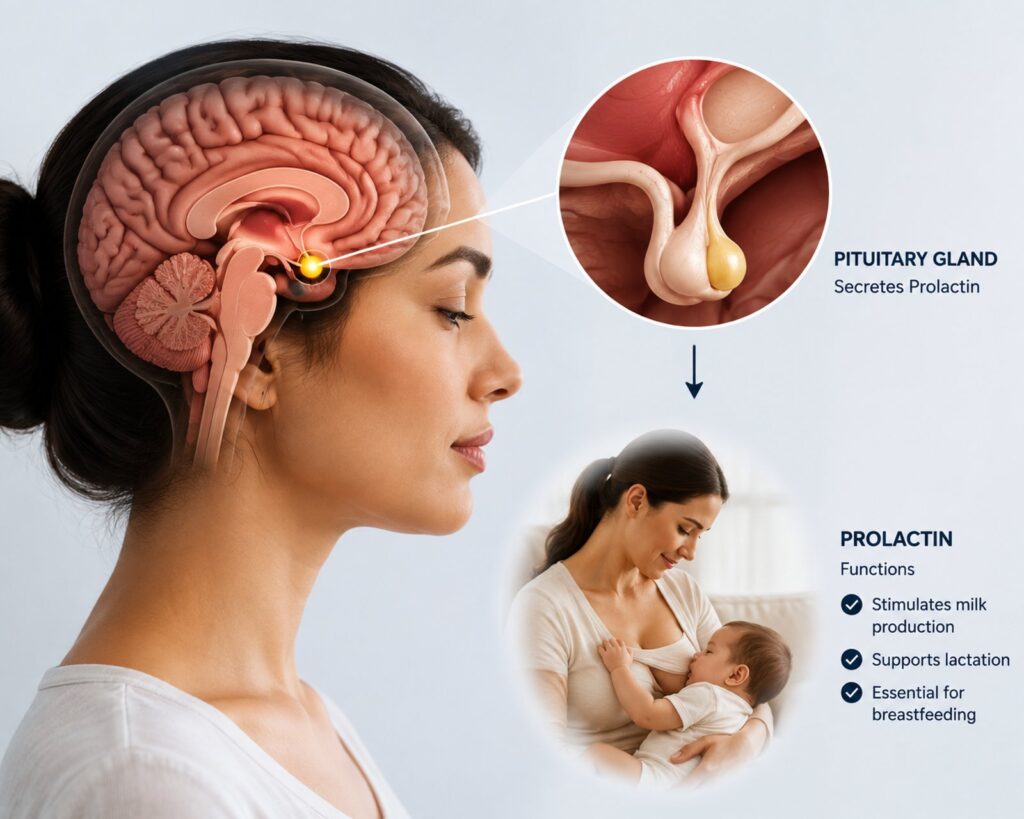
Prolactin is a hormone made by the pituitary gland in your brain. This hormone plays a key role in many body functions. When people ask about “prolactin and its function,” they often want to know how it affects health. Although it is best known for helping women produce milk after childbirth, prolactin is important for everyone, including men and children.
The Primary Function of Prolactin
Prolactin’s main job is to help women make breast milk after having a baby. However, it does more than that. For example, prolactin helps with:
In men, prolactin also supports reproductive health, though its exact role is less clear. Still, it is important for both men and women.
How Is Prolactin Produced and Regulated?
The pituitary gland, a small organ at the base of your brain, makes prolactin. This gland sends prolactin into your blood. But, the amount of prolactin is not always the same. For instance, your body makes more prolactin during pregnancy and after childbirth. On the other hand, the brain chemical dopamine helps keep prolactin levels in check. If dopamine drops, prolactin can rise. Stress, sleep, and some medicines can also change how much prolactin your body makes.
Normal Prolactin Levels and What They Mean
Doctors measure prolactin in nanograms per milliliter (ng/mL). Normal prolactin levels can vary, but usually:
However, these numbers may differ slightly between labs. If your levels are outside these ranges, it may signal a health problem. For example, high or low prolactin can affect your body in different ways.
Symptoms and Effects of Abnormal Prolactin Levels
Sometimes, prolactin levels become too high or too low. This can cause symptoms. For example:
Because these symptoms can have other causes, it is important to talk to a doctor if you notice them.
How Are Prolactin Levels Tested?
Doctors use a simple blood test to check prolactin levels. Usually, the test is done in the morning. This is because prolactin can change during the day. Sometimes, your doctor may ask you to avoid eating or stress before the test. If your levels are high or low, your doctor may order more tests. For example, they may check your thyroid or order a brain scan to look at your pituitary gland.
Lifestyle Tips for Healthy Prolactin Levels
Although some causes of abnormal prolactin are medical, you can take steps to help keep your levels healthy. For instance:
While these tips can help, they do not replace medical care if you have symptoms.
Prevention and When to Consult a Doctor
Sometimes, you cannot prevent changes in prolactin. For example, tumors or certain health problems may cause high or low levels. However, regular check-ups can help catch issues early. If you notice symptoms like missed periods, breast discharge, or changes in sex drive, see your doctor. Early treatment can prevent bigger problems. In addition, always follow your doctor’s advice about medicines and health checks.
Conclusion
Prolactin is a key hormone with many roles in the body. It helps with milk production, supports the immune system, and affects both men and women. Because abnormal prolactin levels can cause health issues, it is important to know the signs. If you have concerns about prolactin and its function, consult at SRI SAI SUPER SPECIALITY DIABETES AND ENDOCRINE CENTRE for personalized advice about prolactin and your health.